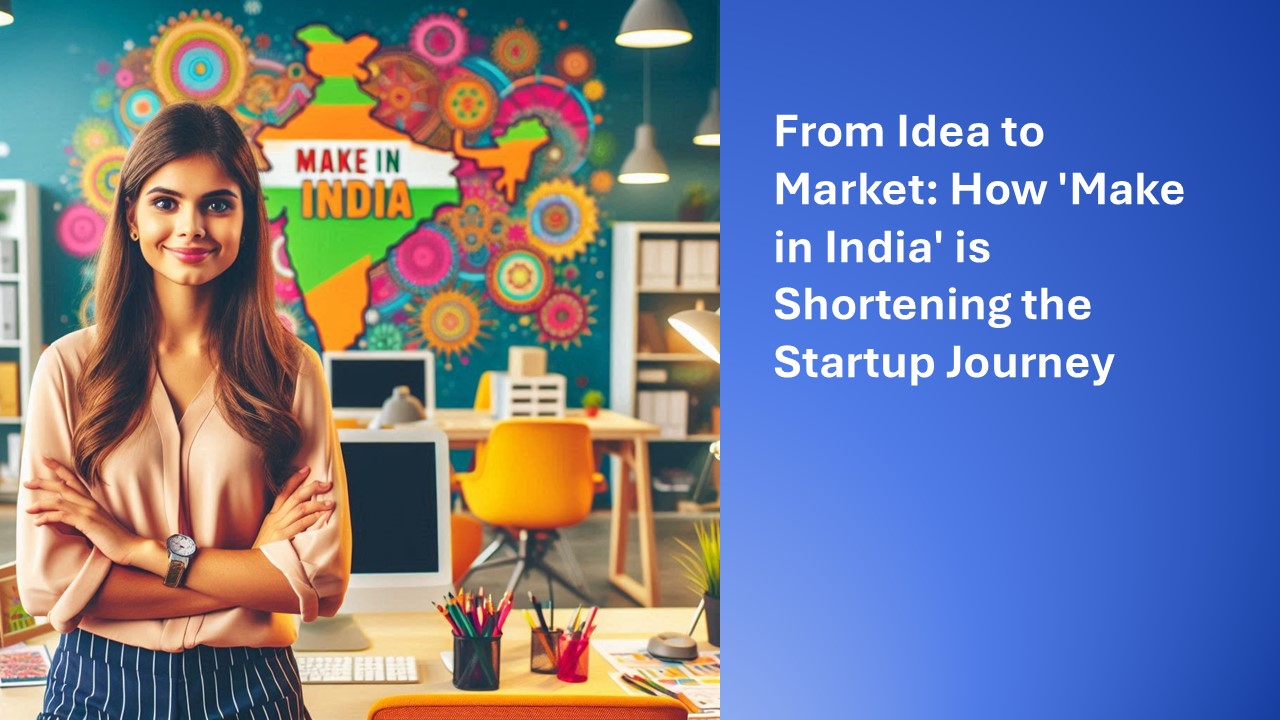
From Idea to Market: How ‘Make in India’ is Shortening the Startup Journey
Analyze how the initiative is streamlining the process for startups, helping them to move from ideation to commercialization more quickly.
The “Make in India” initiative, launched by the Indian government in 2014, represents a transformative policy framework aimed at encouraging domestic manufacturing, fostering innovation, and positioning India as a global leader in production and entrepreneurship. One of the less discussed but highly impactful outcomes of this initiative is its role in shortening the startup journey—from the initial idea to market launch. By creating a conducive environment for innovation and providing the necessary resources and support, “Make in India” is streamlining the process for startups, enabling them to move from ideation to commercialization more quickly and efficiently. This essay explores how the initiative is facilitating this acceleration and the implications for the Indian startup ecosystem.
Simplified Regulatory Framework
One of the most significant ways “Make in India” is shortening the startup journey is through the simplification of the regulatory framework. Traditionally, startups in India faced numerous bureaucratic hurdles, including complex registration processes, multiple licenses, and compliance requirements that often delayed the launch of new businesses. Recognizing these challenges, the “Make in India” initiative, in conjunction with the Startup India program, has introduced a range of reforms aimed at reducing regulatory bottlenecks.
Key among these reforms is the introduction of a single-window clearance system, which allows startups to complete all necessary registrations and obtain approvals through a unified online platform. This system significantly reduces the time and effort required to navigate government procedures, enabling startups to focus on product development and market entry. Additionally, the initiative has streamlined tax regulations, offered exemptions from certain labor laws, and simplified intellectual property registration processes, all of which contribute to a faster and more efficient startup journey.
Access to Funding and Financial Support
Access to funding is a critical factor in the journey from idea to market, and “Make in India” has played a crucial role in enhancing the availability of financial resources for startups. The initiative has facilitated the creation of various government-backed funding schemes, venture capital funds, and incubation centers that provide startups with the capital they need to develop and commercialize their ideas.
One such initiative is the Fund of Funds for Startups (FFS), which was established under the Startup India program with a corpus of INR 10,000 crores. This fund provides financial support to startups through Alternative Investment Funds (AIFs), which, in turn, invest in early-stage ventures. By offering funding at critical stages of development, the FFS helps startups to scale their operations and bring their products to market more quickly.
Moreover, the government has introduced several tax incentives and subsidies for startups, including tax exemptions on profits for the first three years, rebates on patent costs, and reduced interest rates on loans. These financial incentives lower the barriers to entry for startups, enabling them to allocate more resources to product development, marketing, and scaling their businesses.
Infrastructure and Innovation Ecosystem
Infrastructure is a vital component of the startup journey, and “Make in India” has made significant strides in developing the physical and digital infrastructure necessary to support innovation and entrepreneurship. The initiative has promoted the establishment of incubation centers, innovation labs, and industrial clusters across the country, providing startups with access to world-class facilities, mentorship, and networking opportunities.
Incubation centers, in particular, play a crucial role in shortening the startup journey by offering startups the resources and support they need to develop their ideas and bring them to market. These centers provide access to state-of-the-art equipment, research and development (R&D) facilities, and expert guidance on business development, marketing, and legal matters. By offering a nurturing environment for startups, these centers help to accelerate the process of ideation, prototyping, and commercialization.
In addition to physical infrastructure, “Make in India” has also focused on enhancing the digital infrastructure necessary for startups to thrive. The government’s push for digital transformation under the Digital India initiative has resulted in the expansion of broadband connectivity, the development of digital platforms for business services, and the promotion of e-governance. This digital infrastructure not only enables startups to operate more efficiently but also opens up new opportunities for innovation in areas such as e-commerce, fintech, and digital health.
Market Access and Global Outreach
“Make in India” has also played a pivotal role in helping startups to access both domestic and global markets more quickly and effectively. The initiative has fostered a favorable business environment that encourages startups to develop products and services that cater to the needs of both local and international consumers. By promoting India’s manufacturing capabilities and emphasizing quality and innovation, “Make in India” has helped to build a strong brand image for Indian startups on the global stage.
The government’s efforts to simplify trade regulations, reduce tariffs, and establish bilateral trade agreements have further facilitated market access for startups. These measures enable startups to export their products more easily and tap into global markets, thereby accelerating their growth and increasing their competitiveness.
Moreover, the initiative has supported startups in participating in international trade fairs, exhibitions, and business delegations, providing them with opportunities to showcase their products, network with potential investors and partners, and gain valuable insights into global market trends. By facilitating these global outreach efforts, “Make in India” is helping startups to expand their market reach and scale their businesses more rapidly.
Encouraging Innovation and R&D
Innovation is the lifeblood of any successful startup, and “Make in India” has placed a strong emphasis on fostering a culture of innovation and research and development (R&D) in the country. The initiative has promoted the establishment of R&D centers, innovation hubs, and technology parks, which provide startups with access to cutting-edge research, advanced technologies, and collaborative opportunities with academic institutions and industry leaders.
The government has also introduced various incentives to encourage startups to invest in R&D, including tax deductions on R&D expenses, grants for research projects, and partnerships with public research institutions. These incentives enable startups to focus on developing innovative products and services that address the needs of the market, thereby shortening the time required to move from ideation to commercialization.
Additionally, the “Make in India” initiative has facilitated the creation of industry-academia collaborations, where startups can work closely with universities and research institutions to develop and commercialize new technologies. These collaborations provide startups with access to valuable expertise, research findings, and intellectual property, helping them to accelerate the development and market launch of their products.
The “Make in India” initiative has had a profound impact on the startup ecosystem in India, particularly in terms of shortening the journey from idea to market. By simplifying the regulatory framework, enhancing access to funding, developing infrastructure, facilitating market access, and encouraging innovation, the initiative has created an enabling environment for startups to thrive and succeed.
As a result, startups in India are now able to move from ideation to commercialization more quickly and efficiently, allowing them to capitalize on market opportunities, compete on a global scale, and contribute to the nation’s economic growth. The success of “Make in India” in streamlining the startup journey not only underscores the importance of government support in fostering entrepreneurship but also highlights the potential for India to become a global leader in innovation and manufacturing.