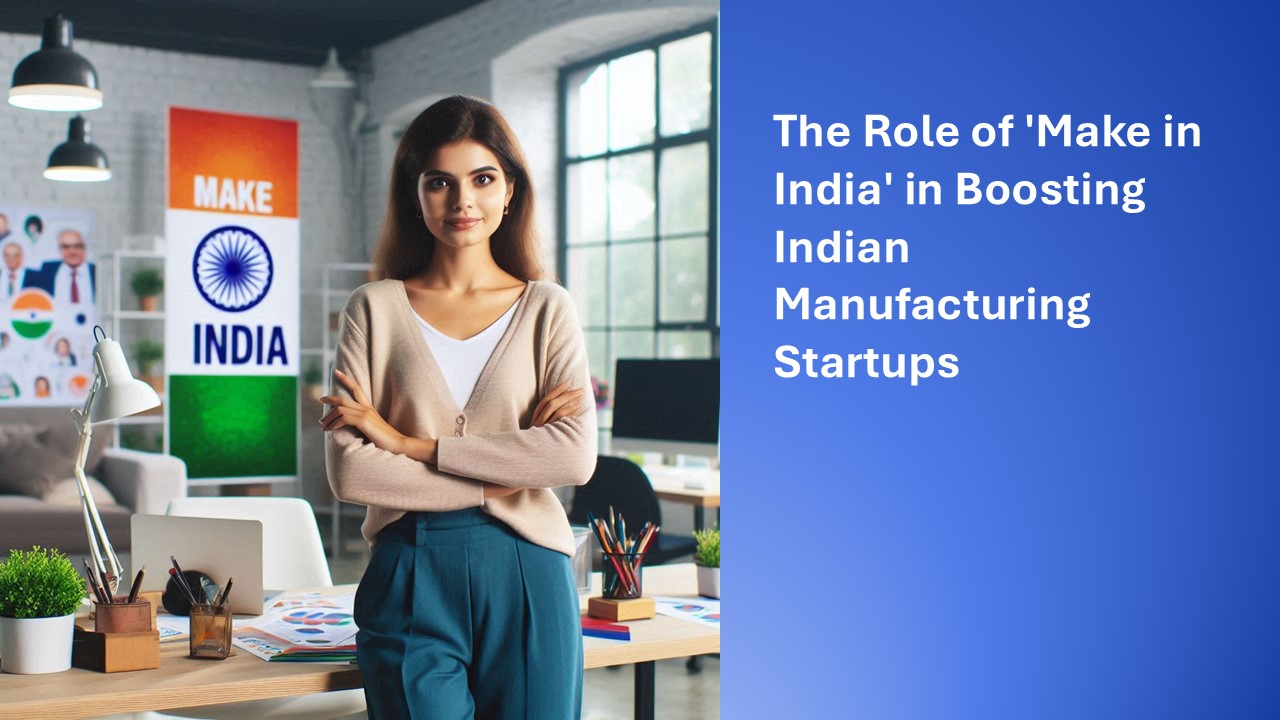
The Role of ‘Make in India’ in Boosting Indian Manufacturing Startups
Discuss how the initiative is revitalizing the manufacturing sector in India by supporting startups that focus on manufacturing and production.
The “Make in India” initiative, introduced by the Indian government in 2014, was designed as a catalyst for transforming India into a global manufacturing hub. With a focus on creating a conducive environment for investment, fostering innovation, enhancing skill development, and building best-in-class manufacturing infrastructure, the initiative has significantly impacted the manufacturing sector. Indian manufacturing startups, in particular, have benefited immensely from the opportunities and support provided by “Make in India.” This essay explores how the initiative is revitalizing the manufacturing sector in India, with a special emphasis on the role it plays in supporting startups focused on manufacturing and production.
Creating a Conducive Environment for Manufacturing Startups
One of the primary objectives of the “Make in India” initiative is to create an environment that encourages entrepreneurship and innovation, particularly in the manufacturing sector. The government has undertaken several policy reforms aimed at simplifying business processes, reducing bureaucratic hurdles, and improving the ease of doing business. These reforms have been crucial in making India a more attractive destination for manufacturing startups.
The introduction of the Goods and Services Tax (GST), the implementation of the Insolvency and Bankruptcy Code (IBC), and the streamlining of labor laws have all contributed to creating a more business-friendly environment. Additionally, initiatives such as the “Startup India” program have provided manufacturing startups with access to funding, mentorship, and incubation support. These measures have reduced the barriers to entry for new manufacturing ventures and have allowed startups to focus more on innovation and production rather than navigating complex regulatory landscapes.
Encouraging Innovation and R&D in Manufacturing
“Make in India” has placed a strong emphasis on fostering innovation and research and development (R&D) within the manufacturing sector. The initiative recognizes that to compete on a global scale, Indian manufacturing must move beyond traditional methods and embrace cutting-edge technologies and processes. To this end, the government has introduced several schemes to promote R&D, including tax incentives for companies engaged in research, grants for innovation-driven projects, and the establishment of innovation hubs and technology parks.
Manufacturing startups have been at the forefront of this innovation drive. By leveraging government support, these startups are developing new materials, adopting advanced manufacturing techniques such as 3D printing and robotics, and creating products that meet global standards. The focus on R&D has also enabled startups to address local challenges with indigenous solutions, thereby enhancing the competitiveness of Indian manufacturing on both domestic and international fronts.
Building World-Class Manufacturing Infrastructure
The success of manufacturing startups is closely tied to the availability of robust infrastructure. Recognizing this, “Make in India” has prioritized the development of world-class infrastructure to support the manufacturing sector. The government has invested heavily in the creation of industrial corridors, special economic zones (SEZs), and smart cities, all of which are designed to provide manufacturing startups with the facilities and connectivity they need to scale their operations.
The development of the Delhi-Mumbai Industrial Corridor (DMIC), for instance, is a key infrastructure project that aims to create a high-tech industrial zone spanning several states. Such projects are instrumental in providing manufacturing startups with access to modern facilities, efficient logistics, and a reliable supply chain network. Additionally, the emphasis on improving power supply, transportation, and communication infrastructure has further enhanced the operational capabilities of manufacturing startups across the country.
Facilitating Access to Global Markets
“Make in India” has also played a crucial role in helping Indian manufacturing startups access global markets. The initiative has facilitated several trade agreements, export incentives, and marketing support programs aimed at increasing the global competitiveness of Indian products. By promoting the “Made in India” brand, the initiative has enhanced the visibility of Indian manufacturing startups on the global stage, opening up new opportunities for export and international collaboration.
For instance, the government’s focus on promoting sectors such as automotive, electronics, and pharmaceuticals has led to significant export growth in these areas. Manufacturing startups that specialize in these sectors have benefited from the increased demand for Indian products abroad. Moreover, the government’s participation in international trade fairs and exhibitions, coupled with efforts to improve product standards and certifications, has made it easier for Indian manufacturing startups to enter and thrive in global markets.
Enhancing Skill Development and Workforce Capabilities
A skilled workforce is essential for the growth of the manufacturing sector. Recognizing this, the “Make in India” initiative has placed a strong emphasis on skill development and workforce training. The government has launched several programs under the Skill India initiative, aimed at providing vocational training and upskilling opportunities to workers in the manufacturing sector.
Manufacturing startups have benefited from this focus on skill development, as it has enabled them to access a pool of skilled labor that is trained in the latest manufacturing techniques and technologies. The availability of a skilled workforce has also allowed startups to maintain high standards of quality and efficiency in their operations, further enhancing their competitiveness in both domestic and international markets.
Promoting Sustainability in Manufacturing
Sustainability has become a critical consideration in the manufacturing sector, and “Make in India” has encouraged startups to adopt sustainable practices in their operations. The government has introduced several initiatives to promote green manufacturing, including incentives for the adoption of clean energy, waste management solutions, and resource-efficient production processes.
Manufacturing startups have responded positively to these initiatives by developing products and processes that minimize environmental impact. For example, startups in the renewable energy sector are manufacturing solar panels, wind turbines, and energy-efficient appliances that contribute to India’s sustainable development goals. By integrating sustainability into their business models, these startups are not only reducing their environmental footprint but also positioning themselves as leaders in the emerging green economy.
The “Make in India” initiative has been a game-changer for the Indian manufacturing sector, providing startups with the support and opportunities they need to thrive. By creating a conducive environment for business, fostering innovation, building world-class infrastructure, facilitating access to global markets, enhancing skill development, and promoting sustainability, “Make in India” has revitalized the manufacturing sector and empowered startups to become key drivers of India’s economic growth.
As the initiative continues to evolve, it will play an increasingly important role in shaping the future of Indian manufacturing. The success of manufacturing startups under the “Make in India” umbrella serves as a testament to the initiative’s impact and highlights the potential for India to become a global leader in manufacturing. With continued support and innovation, Indian manufacturing startups are poised to make significant contributions to the nation’s economic development and global competitiveness.